SAFECORE

Fire & Security

Skip to main content

Automatic Fire Suppression

Sprinkler Systems

Ceiling-mounted protection that attacks fire at the source β€” often before the brigade arrives. Designed, installed, commissioned, and maintained so the right heads open, in the right place, at the right time.

Stop Fire Where It Starts

Automatic Sprinklers Built for Real Occupied Buildings

A sprinkler system does not flood the whole building. Heat from the fire opens only the heads above it, delivering water while sounding the alarm β€” protecting people, stock, and structure in the first critical minutes.

Free surveys and fire-strategy aligned design
Commercial, industrial & residential systems
Alarm valves, pumps, tanks & water supplies
BS EN 12845 and BS 9251 commissioning
Planned servicing and rapid remedial works
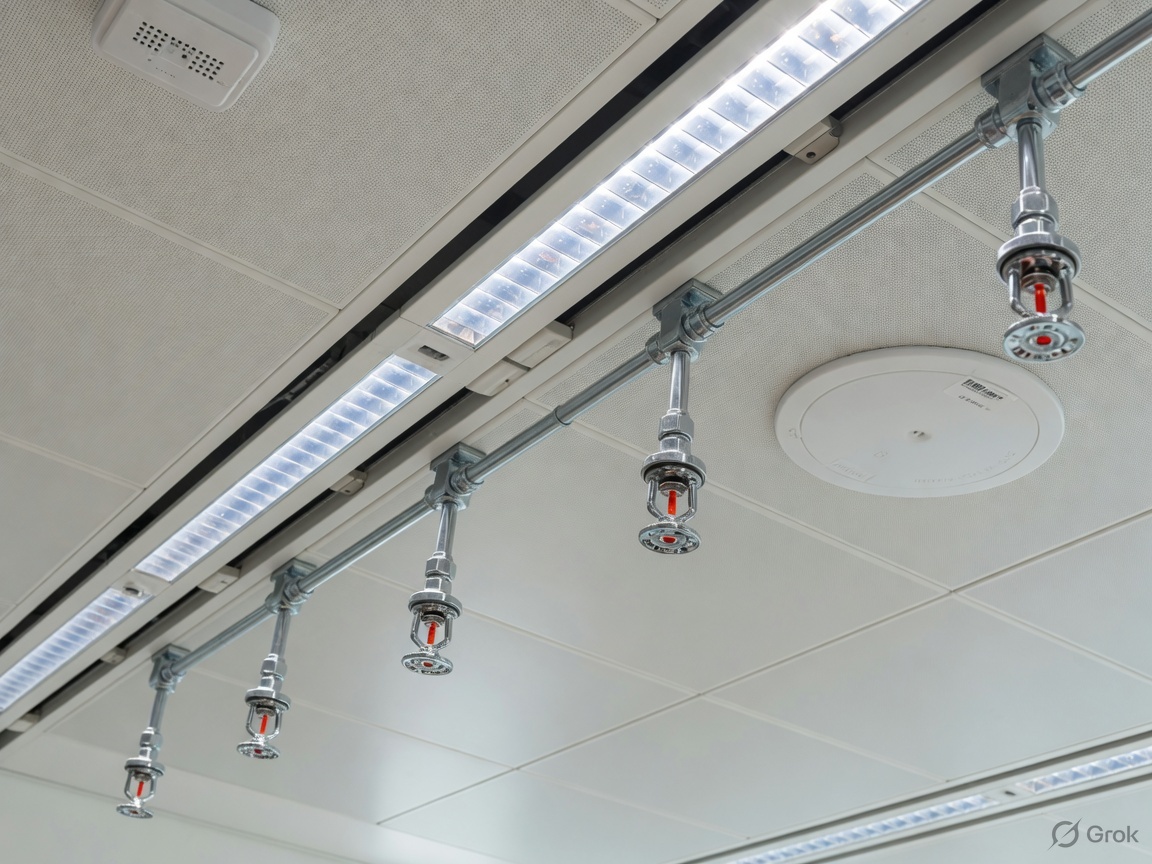
Pendant fire sprinkler heads on a commercial ceiling
BS EN 12845 Design Β· Install Β· Service

Water only where the fire is

Auto

Heat-activated at the seat of fire

12845

Commercial sprinkler standard

9251

Residential & domestic systems

Weekly

Alarm valve test support

The Right System

Sprinkler Systems We Design and Maintain

Occupancy, temperature, water supply, and fire strategy decide the type. We specify a system that protects the building without flooding rooms that were never on fire.

Most common

Wet Pipe Systems

Pipework is permanently charged with water. When a head opens, water is already there β€” the fastest, simplest, and most widely used commercial arrangement.

  • Heated buildings & occupied spaces
  • Fastest water delivery
  • Alarm valve & gong
  • Weekly test programmes
Unheated

Dry Pipe Systems

Pipes are filled with pressurised air until a head opens. Water then fills the system β€” used where freezing would damage a wet main, such as loading bays and car parks.

  • Frost-risk and unheated areas
  • Air-supervised pipework
  • Dry alarm valves
  • Seasonal plant care
Sensitive

Pre-Action Systems

Water is held back until a detection event and a sprinkler head both confirm fire. Ideal for archives, plant rooms, and spaces where accidental discharge would be costly.

  • Detection + head confirmation
  • Data halls & archives
  • Interlock with fire alarm
  • Controlled discharge
BS 9251

Residential Systems

Life-safety sprinklers for apartments, houses, care homes, and HMOs β€” specified to BS 9251 with concealed or domestic heads that sit quietly in living spaces.

  • Apartments, houses & care homes
  • Concealed & domestic heads
  • Mains or tanked supply
  • Building-control ready design

How a Sprinkler Works

Heat Opens the Head. Water Stops the Fire.

Unlike a hose reel or a dry riser, a sprinkler does not wait for people. The glass bulb or fusible link is a heat detector and a valve in one.

01

Heat rises

Fire heats the air around the nearest sprinkler head until the bulb or link reaches its rating.

02

The head opens

Only that head operates. Neighbouring heads stay closed unless the fire spreads under them.

03

Water sprays

A deflector throws a designed pattern of water onto the fire, cooling fuel and suppressing flame.

04

The alarm sounds

Flow through the alarm valve rings the gong and signals the fire alarm β€” so people can evacuate.

Heads & Plant

From Ceiling Head to Alarm Valve

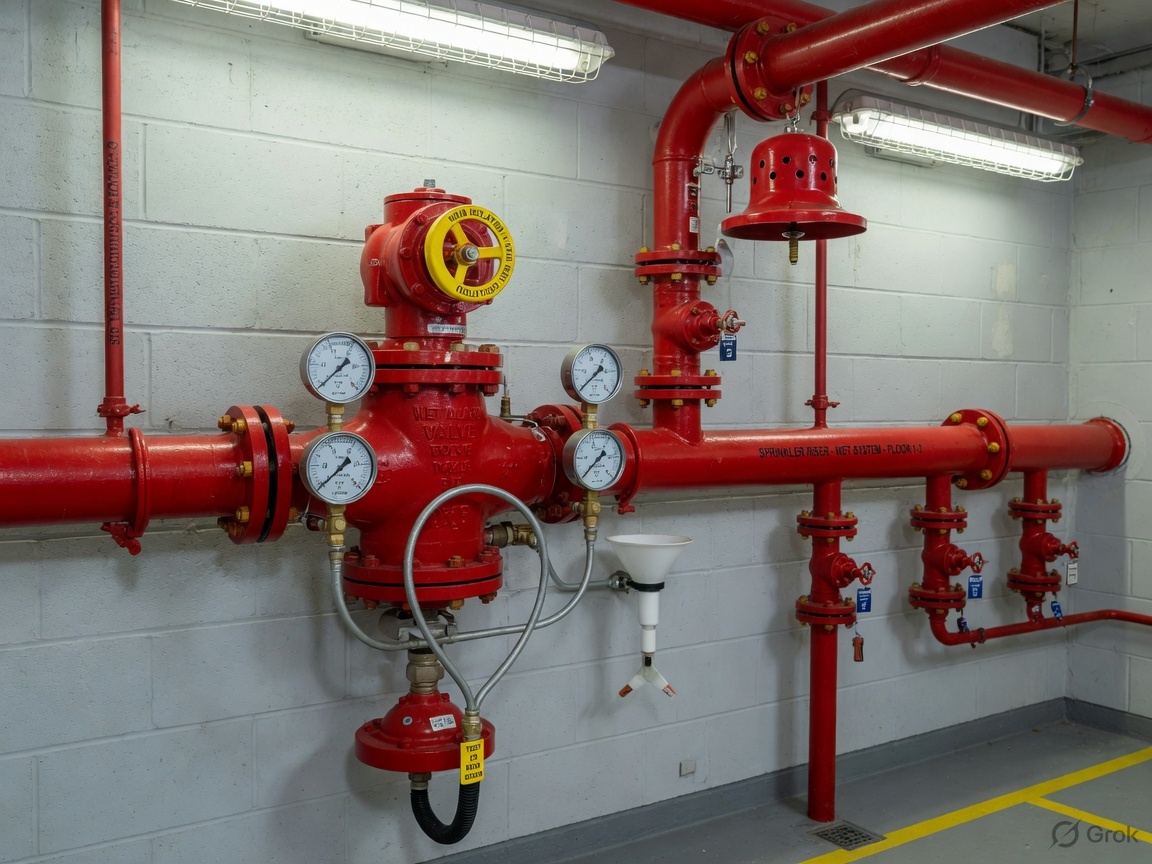
What occupants see is a neat sprinkler head. What keeps it ready is the valve room β€” gauges, gongs, isolation valves, and a proven water supply.

We look after both ends of the system: concealed and pendant heads in occupied rooms, and the alarm valve sets, pumps, and tanks that prove the installation will work on the day it is needed.

Row of pendant sprinkler heads on a commercial ceiling

Ceiling sprinkler heads

Red wet alarm valve assembly with gauges and water motor gong

Alarm valve & gong

System Anatomy

Every Part of a Working Sprinkler Installation

A sprinkler system is a water supply, a valve set, a network of pipe, and heads selected for the hazard. We specify and maintain the full assembly.

Sprinkler Heads

Pendant, upright, sidewall, and concealed heads rated for the occupancy β€” glass bulb or fusible link, selected for coverage and aesthetics.

Alarm Valve Sets

The heart of a wet system: isolation, alarm valve, gauges, test points, and the water motor gong that sounds when water flows.

Pipework Network

Sized and zoned so each head receives the design density. Tidy routes through ceilings, risers, and plant with clear identification.

Water Supplies

Towns-main, tanks, or pumped supplies designed for the hazard class so the system can run for the required duration.

Pumps & Tanks

Where mains pressure is not enough, duty and standby pumps with storage tanks keep the installation independent of everyday demand.

Fire Alarm Interface

Flow switches and valve monitoring so a sprinkler operation raises the fire alarm, alerts the ARC, and starts cause-and-effect.

End-to-End Service

From Design to Certified Protection

SAFECORE manages the full sprinkler lifecycle so heads stay unobstructed, valves operate freely, and test records are ready when insurers or enforcement bodies ask.

Request a quotation

Survey & Hazard Design

We assess occupancy, storage, ceiling heights, and water supply β€” then specify density, head type, and plant to suit the fire strategy.

Supply & Installation

Pipework, heads, valves, pumps, and tanks installed by experienced engineers with tidy finishes in occupied rooms and plant spaces.

Commissioning Tests

Flushing, hydrostatic tests, alarm-valve proving, flow tests, and handover documentation so the system is proven before occupation.

Facilities Handover

Valve-room guidance, weekly test notes, and location schedules so building teams can keep heads clear and plant accessible.

Planned Maintenance

Weekly alarm tests, quarterly and annual inspections, and defect remediation so the installation stays serviceable year after year.

Wider Fire Package

Coordinate sprinklers with fire alarms, emergency lighting, AOVs, and rising mains so life-safety systems work as one strategy.

Tested. Documented. Ready.

Inspection & Testing That Stands Up to Scrutiny

Insurers and enforcing authorities expect a live, tested sprinkler system β€” not just heads in a ceiling. Our regime checks water, valves, flow, and access.

  • Weekly alarm-valve and gong tests
  • Quarterly and annual inspections
  • Pump running, flow and pressure proving
  • Written reports, certificates and remedial plans

Head

Heat-activated discharge

Valve

Alarm set & isolation

Supply

Mains, tanks or pumps

Test

Weekly to annual proofs

How It Works

A Clear Path From Enquiry to Certified System

No vague packages β€” just a structured process that specifies the right hazard design, installs it cleanly, and keeps testing under control.

  1. 01

    Site Survey

    Free visit to assess occupancy, ceilings, and water supply.

  2. 02

    Proposal

    Clear scope for design, install, test, or remedial works.

  3. 03

    Works

    Professional installation with planned access and finishes.

  4. 04

    Commission

    Flush, pressure, alarm, and flow tests with records.

  5. 05

    Maintain

    Weekly tests, planned inspections, and call-out support.

Keep It Ready

A Sprinkler System Needs Ongoing Care

Heads get painted over, stock is stacked too high, and valves sit untested. Planned checks catch problems before an emergency or a failed insurance inspection.

Building owners and responsible persons typically remain accountable for keeping automatic suppression usable. We provide the technical programme β€” weekly tests, inspections, and remediations β€” with documentation for insurers, freeholders, and enforcement bodies.

Weekly

Alarm valve test

Prove the gong and alarm flow, check gauges, and confirm the valve room is accessible.

Quarterly

Operational inspection

Valves, pumps, water supplies, and visible pipework β€” with early defect logging before they become failures.

Annually

Full service & certification

Thorough inspection, flow proving where required, written certificates, and a prioritised remedial plan.

Where We Work

Sprinklers for Occupied Environments

From warehouses to care homes, we design and maintain sprinkler protection around real ceilings, storage heights, and water supplies.

Warehouses & Logistics

Storage hazards, high bays, and in-rack protection specified to the occupancy class.

Offices & Commercial

Concealed and pendant heads that sit quietly in occupied floors and cores.

Retail & Leisure

Public buildings where early suppression protects people, stock, and trading time.

Residential & Care

BS 9251 systems for apartments, HMOs, and care homes with life-safety heads.

Education & Campus

Teaching blocks and multi-building estates with managed service schedules.

Industrial & Plant

Process areas, workshops, and plant rooms β€” including dry and pre-action options.

Ongoing Care

Keep Heads, Valves and Supplies Ready

Painted heads, blocked valves, and untested gongs are common. Planned inspections catch problems early and leave you with records that prove the system has been maintained.

  • Scheduled weekly alarm tests
  • Valve, gauge & gong checks
  • Head, pipework & obstruction surveys
  • Priority remedial works support

Why SAFECORE

Trusted Fire Safety Specialists

Part of IT Data and Security Limited, we bring tidy engineering, clear documentation, and reliable aftercare to every sprinkler project across Sussex and the wider UK.

Experienced Engineers

Teams used to occupied sites, plant rooms, and ceiling works.

Clear Documentation

Test sheets, certificates, and defect reports as standard.

Fast Remedials

Priority help for leaks, seized valves, and failed tests.

Full Fire Package

Sprinklers coordinated with alarms, lighting, AOVs & risers.

Common Questions

Sprinkler System FAQs

Straight answers for landlords, managing agents, developers, and facilities managers considering automatic suppression.

Do all sprinkler heads go off at once?

No. Each head is independently heat-activated. Typically only the heads directly over the fire open. The rest of the building stays dry unless the fire spreads under further heads.

What is the difference between BS EN 12845 and BS 9251?

BS EN 12845 covers commercial and industrial automatic sprinkler systems. BS 9251 covers residential and domestic life-safety sprinklers β€” apartments, houses, and many care settings. We advise which standard your fire strategy requires.

Will sprinklers ruin my stock or interiors?

A working sprinkler is designed to use far less water than fire-service attack later. Concealed heads keep a clean ceiling line, and pre-action systems add extra protection for archives and high-value rooms.

How often should sprinklers be tested?

Wet systems typically need a weekly alarm-valve test, plus quarterly and annual inspections aligned with BS EN 12845 or BS 9251 and your insurer. We set a schedule that matches your building and risk profile.

Can you install sprinklers in an existing building?

Yes. Retrofit is common in residential conversions, warehouses, and occupied commercial floors. We survey ceiling voids, water supplies, and plant space, then programme works to keep disruption down.

Do sprinklers replace fire alarms or extinguishers?

No. Sprinklers suppress fire; alarms warn people; extinguishers support first aid firefighting. Most strategies use them together. We design the sprinkler interface so flow raises the alarm automatically.

Do you cover Sussex and the wider UK?

Yes. We design, install, test, and maintain sprinkler systems across Sussex and further afield across the UK. Contact us with your postcode for availability and lead times.

Complete Protection

Pair Sprinklers With Related Services

Many clients combine automatic suppression with detection, rising mains, and emergency lighting for a complete firefighting strategy.

Ready to Specify or Service Your System?

Book a Free Sprinkler Site Survey

Speak to SAFECORE for expert advice, a free survey, and a clear no-obligation quotation for new installs, retrofits, testing, or remedial sprinkler works.

Ready to Get Protected?

Get a Free Quote on Any Service

Fire alarms, CCTV, access control, and more β€” contact SAFECORE today for expert advice and a no-obligation quotation.